Scripts (up to 4 steps)
Configured in the app: if an entity crosses a value → then any of: webhook (POST/GET a URL, e.g. a Shelly relay or UniFi), push to your phone, fetch a URL into an entity, ping a host, message another node. A script with an interval runs by itself every N seconds (firmware 0.93+); one without runs on demand.
Limits: 2 scripts × 4 steps, URLs up to 95 characters. Scripts run on the node even when the internet is down (push and messages then wait for it).
Fetch any API into a sensor
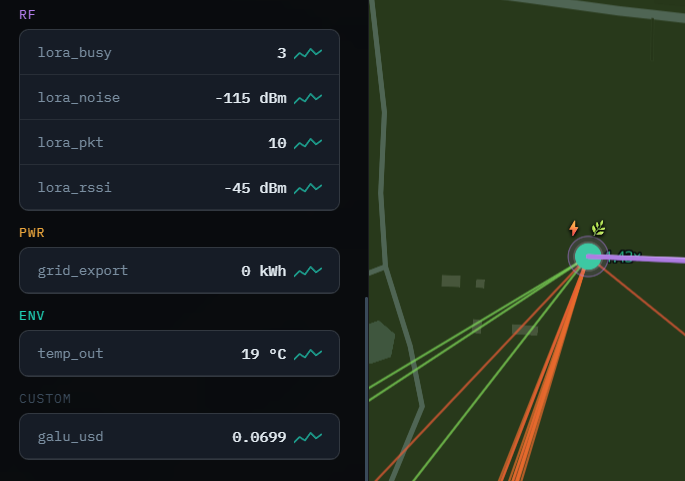
The node can call an HTTP endpoint on a schedule and turn a JSON field into an entity — a tariff, a river level, a token price, your solar inverter. Recipes for common devices (Shelly gen1/gen2+, Fronius) are on /integrations.
Push notifications
Any script step can push to your phone. Pushes are delivered by the network (so they work even when the node's LAN is unreachable from your phone) and keep a history in the app's notification bell.
Messages between nodes
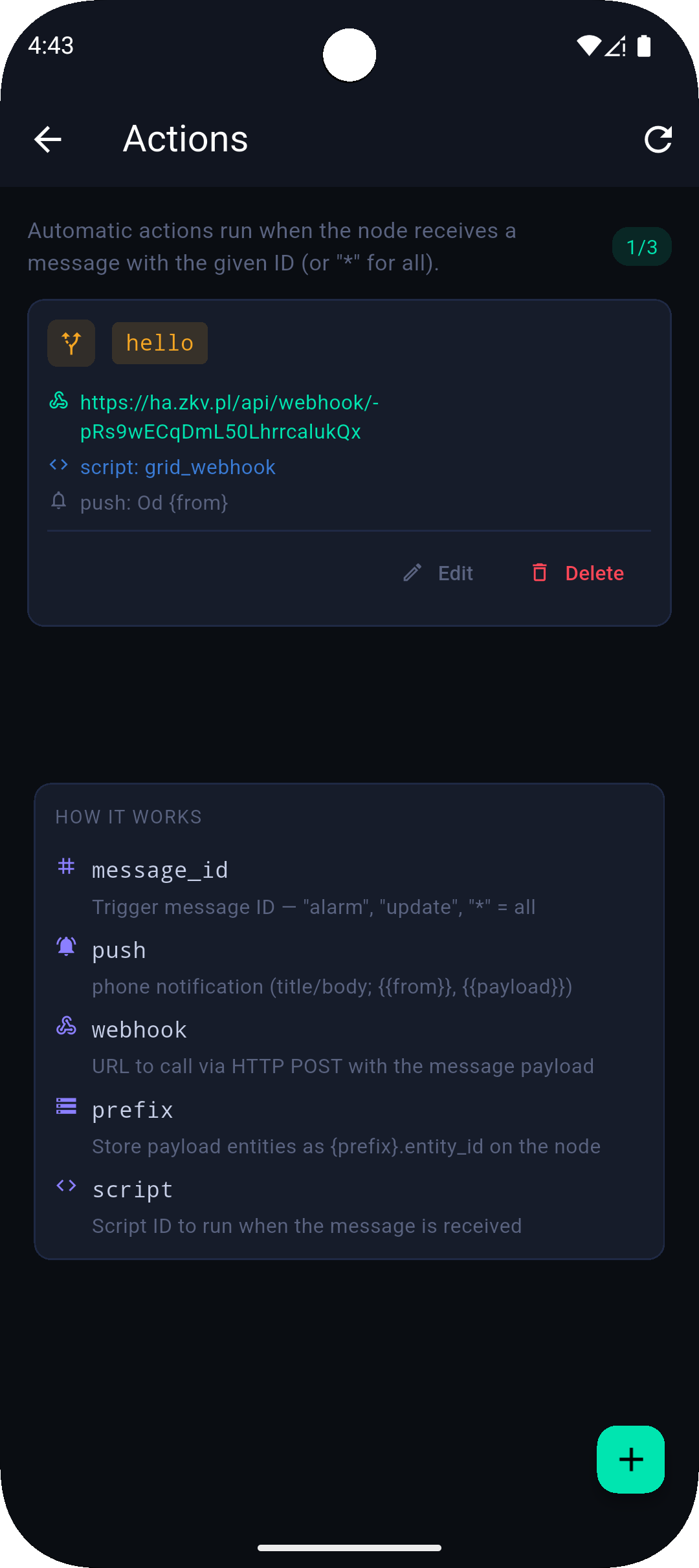
A node can send a message to another node you own (or anyone's, if they accept). The receiving node can bind message ids to actions — turn a script on, write an entity, call a webhook — so one node can trigger another anywhere in the world.
Subscribe to other nodes' data
Any node can publish readings; you can subscribe to another node's entities and get them as your own (neighbor.*) — on the node, in the app, in Home Assistant. Billed daily in GALU to the publisher.
Price
Scripts, fetch and monitors are free. Push 0.3 GALU, node message 0.5 GALU, buying a node's data 0.5 GALU, subscription 2 GALU/day — all recycled into the reward pool (data purchases: 70% to the publisher). See Wallet & fees.